Manuka Honey for My Soul?
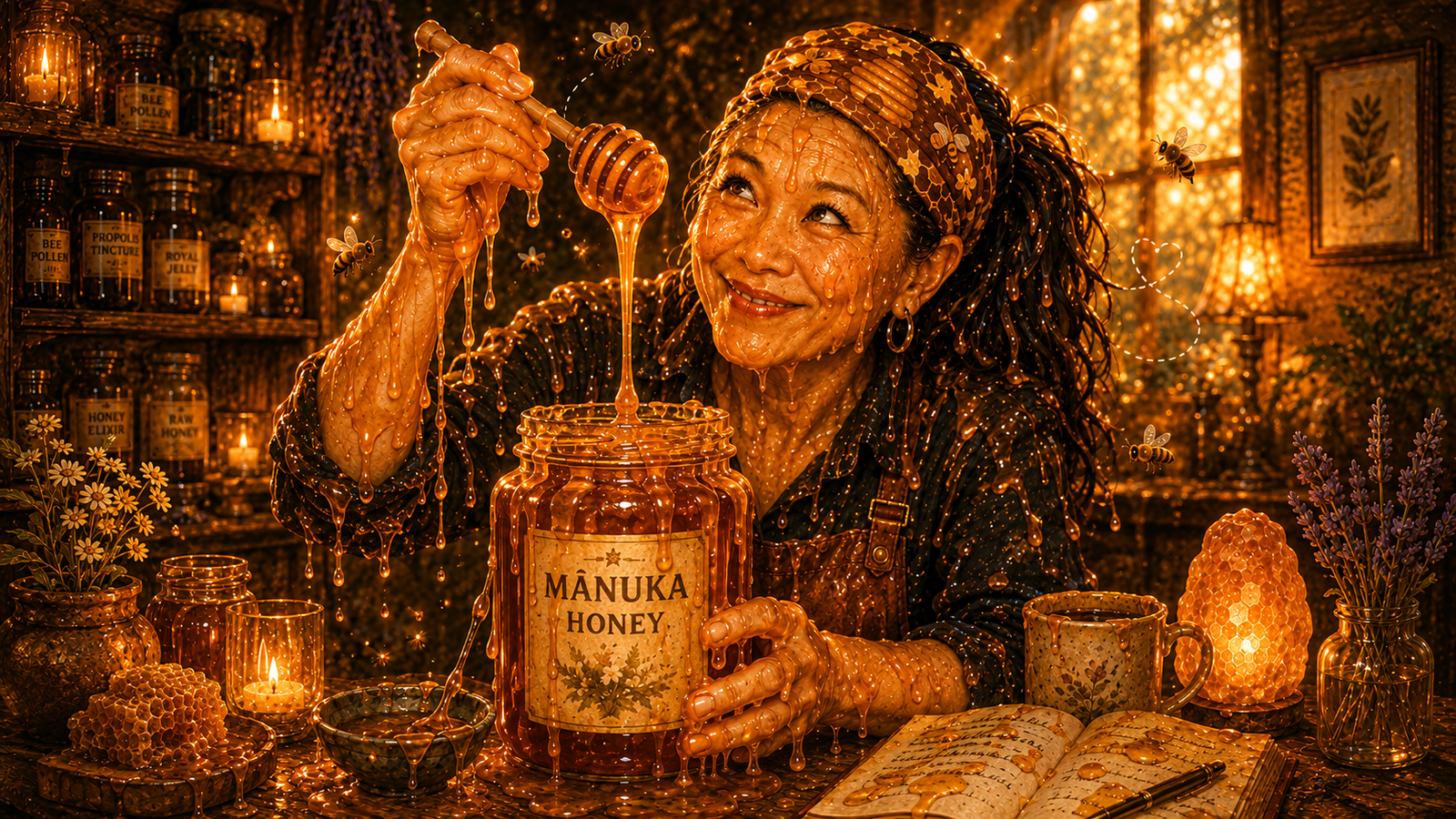
Manuka honey does not hurry. It gathers on the spoon, thick and amber, then stretches into a slow ribbon. It clings to the spoon, the rim of the jar, the fingers that touch it. And yes, it is sweet too.
I had been thinking about wholistic healing practices and products—ways of tending the body that were outside my usual realm of experience. I was accustomed to taking what the doctor ordered. Pharmaceuticals. Treatments that sometimes came with unpleasant side effects or simply did not work.
Then I began learning about Manuka honey. Medical-grade Manuka honey is used to help tend certain wounds and burns. Placed gently upon a wound, it helps keep infection from taking hold. Its antibacterial and anti-inflammatory properties create space for the body to do what it already knows how to do.
Something about that caught my imagination. Here was something thick enough to remain where it had been placed. It did not attack the body or force the wound to close. It stayed close to the tender place, protecting the conditions in which healing could happen.
And I wondered:
Manuka honey is used for wounds. Can I put it on my soul?
We carry emotional wounds too.
Some are connected to choices we have made. Others come through loss, rejection, neglect, or harm caused by another person. Whatever their source, the pain is real and deserves care.
Some wounds remain tender beneath the surface. Others become inflamed and make themselves known through anger, shame, loneliness, feelings of unworthiness, or the fear that we will never truly belong.
We often judge the feelings that surface without recognizing the wound beneath them. We become angry with ourselves for feeling angry. Ashamed of the shame we carry. Lonely, and then embarrassed by how much we long for connection.
We want the symptoms to disappear. We want to feel better. We want something that will make the hurting stop.
Sometimes we come to believe that healing must be harsh in order to be effective. We turn against what we feel. We scold ourselves for not being over it. We try to force the wound to close before it has been gently tended.
But the Manuka honey offered another possibility.
What if something could be powerful without being violent? What if the soul could be tended with a balm that calms what is inflamed, protects what is vulnerable, and creates space for healing to unfold naturally?
For me, that healing balm is Spirit.
The stickiness became part of the image for me. Honey does not lightly brush the wound and disappear. It stays. It clings. It remains close to the place that needs tending.
That is how I experience Spirit. Spirit does not pass briefly over the surface of our pain and move on. Spirit remains with us in the tender place.
Even the sweetness began to matter. Not a sweetness that asks us to pretend the pain is pleasant or to call what harmed us good. It is the quiet sweetness of discovering that Love will meet us even here.
Spirit does not deny the wound or pretend that what happened did not matter. It does not excuse harm or ask us to remain where harm continues.
Spirit meets the tender place with Love. There is room for anger, grief, shame, or fear to be acknowledged without confusing the wound—however it came to be—with who we are.
This healing balm is not foreign to us. Divine Love is not something brought in from somewhere outside ourselves to repair us as though we were fundamentally broken. Spirit is already within us.
Affirmative Prayer helps us remember that. It is not pleading with a distant God to come and fix us. It is aligning our awareness with the deeper Truth of who we are.
Divine Love is present within me.
My Source is the Life within me.
I am whole.
Meditation allows us to rest in that remembering. We may find that rest in stillness, breath, movement, music, prayer, or the steady presence of someone we trust.
It invites us to notice what hurts without immediately judging it, fighting it, or trying to escape it. We do not have to force ourselves deeper than feels safe. We do not have to pretend the wound is not there. We allow it to be held within a Presence larger than the pain.
The balm does not create our wholeness.
It stays close to the tender place, gently tending whatever has obscured our awareness of the Divine Life already within us.
Perhaps that is what spiritual healing can look like—not denying the wound, rushing it, or forcing it to disappear, but tending it from the Truth of who we are.
Spirit is already here. The balm is already within us. There is sweetness in that remembering.
Wholeness does not deny the wound.
It allows us to tend what hurts without forgetting who we are.